
- May 3, 2025
- Admin
Can Black Sesame Seeds Really Reverse Grey Hair? Here’s What Science (and Tradition) Say!
In the age of hair dyes and expensive salon treatments, a humble kitchen ingredient has taken the internet by storm: black sesame seeds. Touted by Ayurvedic experts and now trending across wellness blogs and social media platforms alike, these tiny seeds are believed to boost melanin production and reverse premature greying. But how much of this is fact, and how much is folklore?
Let’s uncover the truth behind this natural remedy—and what it could mean for your hair health.
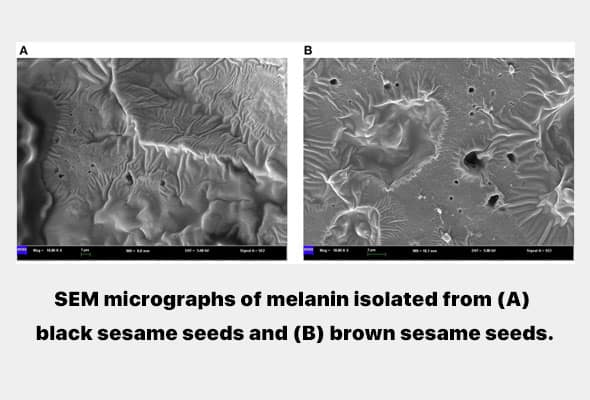
The Greying Hair Dilemma: A Modern Epidemic?
Premature greying is increasingly common, especially among people in their 20s and 30s. While genetics, stress, poor nutrition, and lifestyle are key culprits, more people are turning toward natural solutions like black sesame seeds in hopes of a reversal.
What Makes Black Sesame Seeds Special?
Black sesame seeds are rich in:
Copper – A trace mineral essential for melanin production, the pigment responsible for hair color.
Vitamin B1, B2, and E – Promoting healthy scalp circulation and hair growth.
Iron, Zinc, and Calcium – Supporting overall hair strength and shine.
Lignans and antioxidants – That fight oxidative stress, one of the biggest contributors to hair greying and aging.
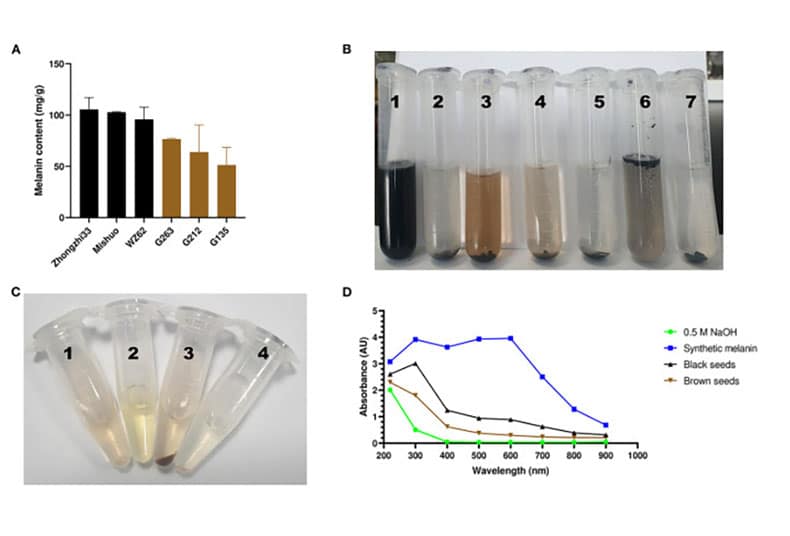
Variation, chemical, and UV-Vis absorbance characteristics of sesame melanins. (A) variation of melanin content in black and brown sesame seeds. (B) Solubility of the black sesame melanin. The serial numbers 1–7 on the tube correspond to melanin in an alkaline solution (0.5 M NaOH), H2O (pH 6.8), methanol (80%), ethanol, isopropyl alcohol, chloroform, and hexane, respectively. (C) Precipitation of the brown sesame seed melanin. The serial numbers 1–4 correspond to melanin in a sodium hydroxide solution (1 mg/mL) + 125 μL of ddH2O, 500 μL of ddH2O + 125 μL of 10 % FeCl3, melanin in a sodium hydroxide solution (1 mg/mL) + 125 μL of 10 % FeCl3, and melanin in a sodium hydroxide solution (1 mg/mL, pH 8.0) + 80 μL of 6 mol/L HCl. (D) UV–spectroscopy absorbance spectra of a synthetic melanin and the melanin pigments isolated from black and brown sesame seeds.
What Does Science Say?
While large-scale human trials are limited, emerging studies and traditional Chinese medicine (TCM) strongly support black sesame seeds’ role in hair pigmentation:
A study published in the Journal of Medicinal Food (2010) found that black sesame seed extract increased melanin activity in aging mice.
TCM texts have recommended black sesame seeds for centuries to nourish the liver and kidneys—organs believed to be linked with hair vitality.
Anecdotal evidence from Ayurvedic practices suggests daily consumption for at least 2-3 months may reduce the rate of greying.
Real-Life Examples
Ayurvedic influencers often recommend consuming 1 tablespoon daily, raw or lightly roasted, for visible results in hair color and texture.
In Korea and China, black sesame seed paste is a common breakfast item, often cited for keeping hair youthful into old age.
Wellness blogger @herbalroots (1.2M followers) posted a 90-day black sesame challenge—her hair visibly looked darker by Day 60.
So, Should You Start Eating Black Sesame Seeds?
While they won’t work like hair dye overnight, black sesame seeds are a nutrient-dense, side-effect-free way to support natural hair color and scalp health.
Pro Tip: Mix them with jaggery, honey, or add to smoothies for easier consumption.
Final Word from Hairsmith.in Experts
At Hairsmith Hair Transplant Clinic, we believe in a holistic approach to hair health—combining advanced medical solutions with supportive lifestyle and nutrition habits. While black sesame seeds show promise, early intervention and diagnosis are key when dealing with hair loss or premature greying.
If you’re experiencing rapid greying, consult our experts for a customized treatment plan tailored to your scalp and genetics.